PSYCHOLOGY · HALLOWEEN
Why We Love Being Scared: The Fun Psychology Behind Horror Tolerance
Updated October 18, 2026 ·
min read 9 ·
By SpookyFun Team
Paying for a haunted house seems insane — until you understand the brain science behind it. Here is why some people chase fear and others avoid it, and what your horror tolerance says about you.
Every October, millions of people willingly line up to be chased by chainsaw actors, sleep through horror marathons, and walk through attractions advertised as "too intense for children." If fear is the body's alarm system, why do so many of us set it off on purpose? The psychology of horror tolerance is one of the most studied quirks in media psychology, and the answer is more interesting than "some people just like scary stuff."
Whether you are the one picking the horror movie or the one hiding behind a pillow, your reaction is predictable from a handful of well-researched factors. Let's walk through them — and at the end you can measure your own with our Halloween Horror Tolerance Test.
The safety frame: fear feels good when the brain knows it is fake
The single most important ingredient is what researchers call the protective frame or the safety signal. Your body cannot tell the difference between real and simulated threat very well — your heart still races, your palms still sweat — but a second part of your brain keeps whispering, "This is a movie. This is a haunted house. You paid for this."
That gap between a racing body and a safe mind is the sweet spot. It is why a roller coaster is fun but a real near-accident is not. The same adrenaline that would be agony on a dark street becomes a thrill inside the frame. Remove the frame — if a horror movie felt like it was really happening to you — and the experience stops being fun very fast.
Arousal transfer: the leftover energy becomes pleasure
Psychologist Dolf Zillmann's excitation transfer theory explains another piece. When your body is physiologically aroused — heart up, breathing fast — that arousal takes a few minutes to cool down. If you then switch to something pleasant, your brain mistakes the leftover adrenaline for extra enjoyment. The laugh after a jump scare, the relief when the hero survives, the walk out into the cool October air — all of it gets amplified by the arousal that is still draining out of your system.
This is also why horror dates work: the pounding heart you feel next to someone gets partly misread as attraction. It is a cheap, reliable arousal transfer.
Sensation seeking: some brains run hotter
Personality researcher Marvin Zuckerman found that people differ on a stable trait he called sensation seeking: the need for varied, novel, intense experiences and the willingness to take physical and social risks for them. High sensation seekers are disproportionately drawn to horror, roller coasters, spicy food, and fast travel. Low sensation seekers find the same experiences overstimulating and exhausting.
So part of "why we love being scared" is simply: some of us need more stimulation to feel alive. It is not machismo or bravery — it is a baseline difference in how much arousal your brain finds pleasant.
Mastery and self-expansion: surviving fear is a high
There is a second reward that shows up especially in haunted houses and survival horror games: mastery. Research on haunted attractions finds that the people who report the biggest "fun" are often the ones who walked in nervous and walked out saying, "I did it." Finishing a scary experience is a small, achievable victory over your own anxiety. It expands your sense of what you can handle.
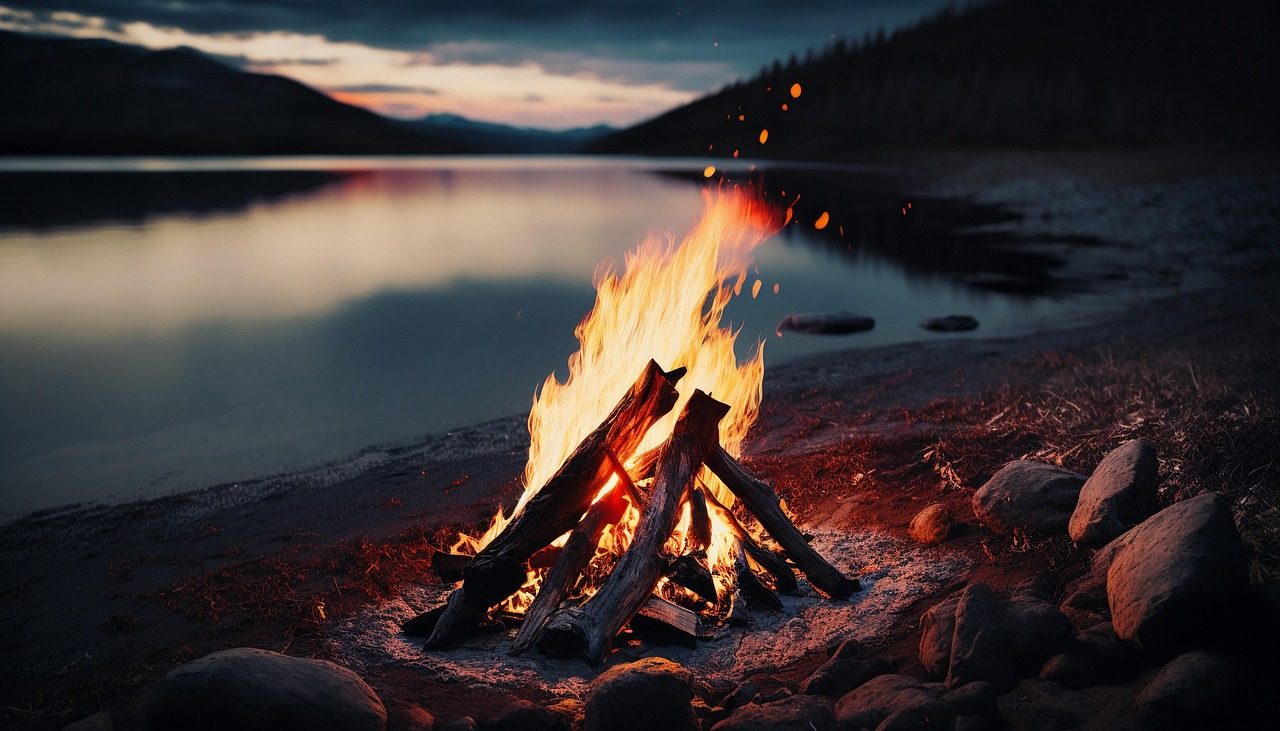
This is why campfire storytelling and slasher films feel different from real danger: you get to be the hero who survives, and you get to brag about it afterward. That narrative of conquest is deeply satisfying.
Why some people hate horror (and that is normal too)
Not everyone has the safety frame working in their favor. Several traits predict low horror tolerance, and none of them are weaknesses:
- High empathy: you viscerally feel the victim's pain instead of enjoying the tension.
- High disgust sensitivity: gore, needles, and rotting imagery trigger a genuine revulsion response that the safety frame cannot override.
- Recent stress or trauma: an overloaded stress system does not need a pretend alarm. Horror stops being a game when your real alarm is already ringing.
- Childhood wiring: kids under about 8-10 cannot always separate on-screen threat from real danger, so what is "fun scary" for an adult is a nightmare for a child.
If this is you, you are not boring or cowardly. You are built for a different kind of fun — and that is exactly how we picked the titles in our guide to best Halloween movies for kids and low-fright family nights.
The anatomy of a jump scare
A jump scare works because of two-step biology. First, a slow, tense scene lowers your heart rate variability and focuses your attention — this is the build. Then, a sudden loud noise combined with an unexpected image triggers a startle reflex: your heart spikes, your muscles tense, a burst of cortisol and adrenaline floods you. Seconds later comes the relief response: your parasympathetic nervous system settles you down, and that release feels good because the threat was fake.
People who love horror are essentially training this reflex on purpose, the same way a weightlifter loads a bar. The discomfort is temporary; the afterglow is the point.
Practical takeaways for movie night and Halloween
- Match the film to the lowest tolerance in the room. One stressed-out viewer ruins it for everyone; pick by the scaredest person, not the bravest.
- Keep the frame visible. Lights partially on, snacks in reach, a dog nearby — every "we are safe" cue lowers dread.
- Build gradually. Start with a PG-13 spookfest before the R-rated gore. Mastery is earned in steps, and your tolerance grows the more you practice.
- Respect the exit. Anyone who needs to leave the room should be able to, no teasing. The protective frame collapses under shame, and then horror stops being fun.
- Time it right. Don't put a heavy film on for kids the night before school, and don't force a scare on someone already anxious.
So why does Halloween exist?
Halloween, in psychological terms, is a giant cultural machine for delivering fear inside a protective frame: costumes, candy, carved pumpkins, and friendly ghosts are all reminders that the monsters are pretend. We get to feel the rush of being scared, survive it every year, and walk away with a bowl of candy and a story to tell. Your tolerance for that rush is not a moral judgment — it is a personality trait, and there is a scary-sized slice of Halloween fun tuned for every point on the curve.
每年十月,都有千百万人自愿排队被拿电锯的演员追着跑,通宵看恐怖片马拉松,走进门口标着"儿童不宜"的鬼屋。如果说恐惧是身体的警报系统,为什么我们中有那么多人偏偏要亲手把它按响?"恐怖耐受度"的心理学,是媒介心理学里被研究得最多的怪癖之一,而答案比"有些人就是爱看恐怖"要有趣得多。
不管你是那个挑恐怖片的人,还是那个躲在枕头后面的人,你的反应都可以用几个被反复验证的因素预测出来。下面我们一条条讲完——最后你可以用我们的万圣节恐怖耐受度测试量一量自己。
安全框架:大脑知道是假的,恐惧才变爽
最重要的一味调料,是研究者所说的保护框架,或者叫安全信号。你的身体其实分不清真实威胁和模拟威胁——心跳照样飙,手心照样出汗——但大脑里另一部分一直在轻声提醒:"这是电影。这是鬼屋。这是你自己花钱买的。"
身体在狂跳、大脑却知道安全,这个落差就是甜点区。所以过山车好玩,真出车祸不好玩。同样的肾上腺素,走在黑巷子里是折磨,待在框架里就是刺激。一旦框架消失——恐怖片让你觉得真的在自己身上发生——它立刻就不好玩了。
唤醒转移:剩下的能量会变成快乐
心理学家 Dolf Zillmann 的兴奋转移理论解释了另一块拼图。当身体处于生理唤醒状态——心跳加速、呼吸急促——这种唤醒要好几分钟才会退下去。如果你这时切换到愉快的事情,大脑会把残留的肾上腺素错当成额外的快乐。惊吓之后的那一笑、主角活下来时的松气、走出屋外吹到十月凉风的那一刻——都会因为你身体里还没排完的唤醒而被放大。
这也是为什么"恐怖约会"有效:你在另一个人旁边怦怦跳的心,会被部分误读成心动。这是一种便宜又可靠的唤醒转移。
感觉寻求:有些大脑天生转得更热
人格研究者 Marvin Zuckerman 发现,人在一个稳定特质上有差异,他称之为感觉寻求:对多变、新鲜、强烈体验的需求,以及为此愿意承担身体与社交风险的意愿。高感觉寻求者不成比例地被恐怖片、过山车、爆辣食物和高速旅行吸引;低感觉寻求者则觉得同样的体验过度刺激、精疲力竭。
所以"我们为什么热爱被吓"有一部分很简单:我们中有些人需要更多刺激才觉得活着。这不是逞强、不是勇敢,而是大脑觉得多高的唤醒才舒服,这件事上的基线差异。
掌控感与自我扩张:扛过恐惧本身就是爽
鬼屋和生存恐怖游戏里还会出现第二种奖励:掌控感。对鬼屋的研究发现,报告"最好玩"的人,往往是那些进去时很紧张、出来后喊着"我做到了!"的人。完成一次恐怖体验,是一次小而具体的、对自己焦虑的胜利。它拓展了你对"我能扛住什么"的认知边界。
这就是为什么篝火讲故事和砍杀电影不同于真实危险:你可以当那个活下来的英雄,事后还能拿来吹牛。这种"征服叙事"让人极其满足。
为什么有些人就是讨厌恐怖(这也很正常)
不是每个人的安全框架都在好好工作。有几个特质可以预测低恐怖耐受度,而它们全都不是缺点:
- 高共情:你会真切地感受到受害者的痛,而不是享受紧张感。
- 高厌恶敏感:血浆、针头、腐烂画面会触发真实的反胃反应,安全框架压不住。
- 近期压力或创伤:已经过载的应激系统不需要再加一个假警报。当你真实的警报本来就在响,恐怖就不再是游戏。
- 童年发育:8-10 岁以下的孩子不一定能分清银幕威胁和真实危险,大人眼里"好玩吓人"的东西,对他们就是噩梦。
如果你是这种人,你不是无聊,也不是胆小。你只是被设置成了另一种快乐——这正是我们在最佳儿童万圣节电影和低惊吓家庭夜片单里挑选片目的标准。
一个惊吓镜头的解剖
jump scare 之所以成立,靠的是两步生理反应。第一步,一段缓慢紧绷的场景降低你的心率变异性,让注意力高度集中——这是蓄力。第二步,突然的巨响配上意外画面,触发惊跳反射:心跳飙升、肌肉绷紧、皮质醇和肾上腺素轰一下灌满全身。几秒钟后,放松反应启动:副交感神经把你安顿下来,而这种释放之所以舒服,是因为威胁是假的。
热爱恐怖的人,本质上是在有意训练这个反射,就像举重的人往杠铃上加片。不适是暂时的,余韵才是目的。
电影之夜和万圣节的实用结论
- 按屋里耐受度最低的那个人选片。一个被吓到的人会毁掉所有人的体验,按最胆小的、而不是最勇敢的人选。
- 让框架保持可见。灯别全关、零食在手边、狗趴在旁边——每一个"我们很安全"的线索都在降低恐惧。
- 循序渐进。先上 PG-13 的轻恐怖,再碰 R 级血浆。掌控感是一步步挣来的,你越练,耐受越高。
- 尊重离场。任何需要走出房间的人都可以走,不许嘲笑。保护框架一旦在羞辱下崩塌,恐怖立刻不好玩。
- 挑对时间。开学前一晚别给孩子上重口片,也别去逼一个本来就焦虑的人吓自己。
那万圣节到底为什么存在?
用心理学术语说,万圣节是一台巨大的文化机器,专门在保护框架里递送恐惧:服装、糖果、南瓜灯、友善的鬼,全都是在提醒你"怪物是假的"。我们得以体验被吓的刺激,每年都活下来,还能端着一碗糖、带着故事离开。你对这种刺激的耐受度不是道德评判——它是一种人格特质,而万圣节这条曲线上的每一个点,都有一块吓人大小的快乐专门为你准备。